

Masterbatch|color paste
Tailor made solutions for customers and create more innovative products for them

Document number: DENSON-MTD-PMMA-Colorant-021
Author: Jia Ziqi
Date: 27 October 2023
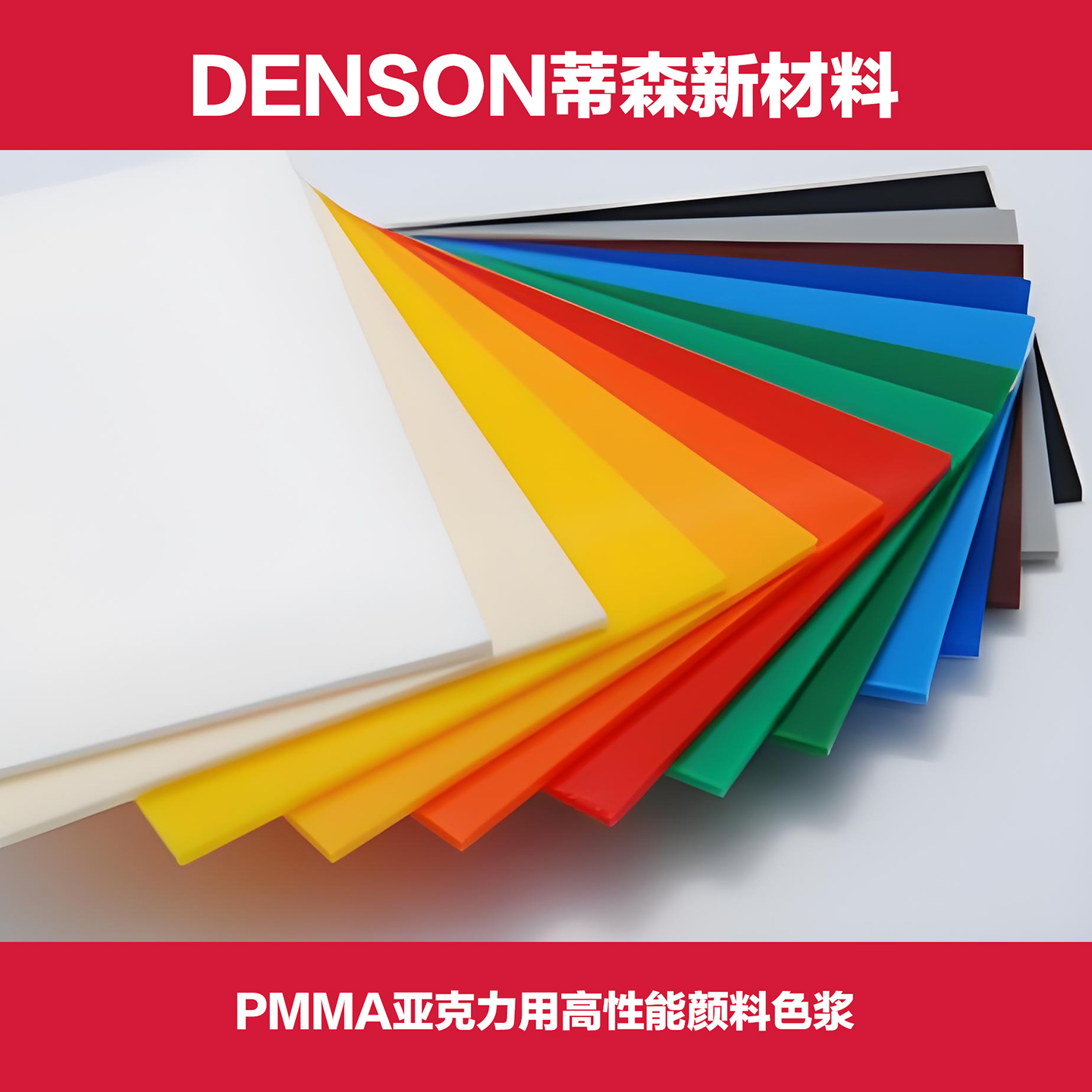
Systematic Technical Guidelines for the Application of ThyssenBayer Organic Pigment Color Paste in PMMA Resin Coloring. This document covers performance characteristics and product features of the color paste, compatibility analysis with PMMA, recommended processing techniques, standard dosage ranges, and critical precautions to ensure optimal color expression, mechanical properties, and long-term durability in final products.
1、Application recommendation: Why choose Thyssen high quality PMMA series acrylic color paste
As an amorpous polar polymer, PMMA is renowned for its excellent optical transparency, high surface hardness, outstanding weather resistance, and processing stability (typically operating within a temperature range of 180-250°C). Selecting colorants for such substrates must meet stringent technical requirements.
Compared with competitors' products or dyes, Tissot PMMA series color paste has the following core advantages in PMMA application:
1. High coverage and brightness: The use of high performance organic pigments can achieve extremely bright and covering color effect, perfectly retain the original crystal texture of PMMA, very suitable for indicator lights, decorative panels, billboards, high-end cosmetics packaging, etc.
2. Excellent dispersion stability: The form of pre-dispersed color paste ensures that pigment particles can be evenly and stably distributed in PMMA matrix at micron or even nanometer level, avoiding color spots, stripes or strength loss caused by pigment agglomeration.
3. Excellent thermal stability: the selected high-performance organic pigment varieties can withstand the high temperature in the processing process of PMMA (usually more than 230°C), and will not be discolored, burned black or oxidized yellow due to thermal decomposition.
4. Exceptional Lightfastness and Weather Resistance: For outdoor applications such as advertising light boxes, automotive taillights, and architectural skylights, the ThyssenPMMA series color paste selects pigments with lightfastness ≥8 and high weather resistance (passed QUV aging tests)
to ensure colors remain stable over extended periods without fading or powdering. Our core products utilize phthalocyanine-based organic pigments with advanced chemical structures, including isoindolinone, quinacridone, and bismuth vanadate pigments, achieving superior overall performance.
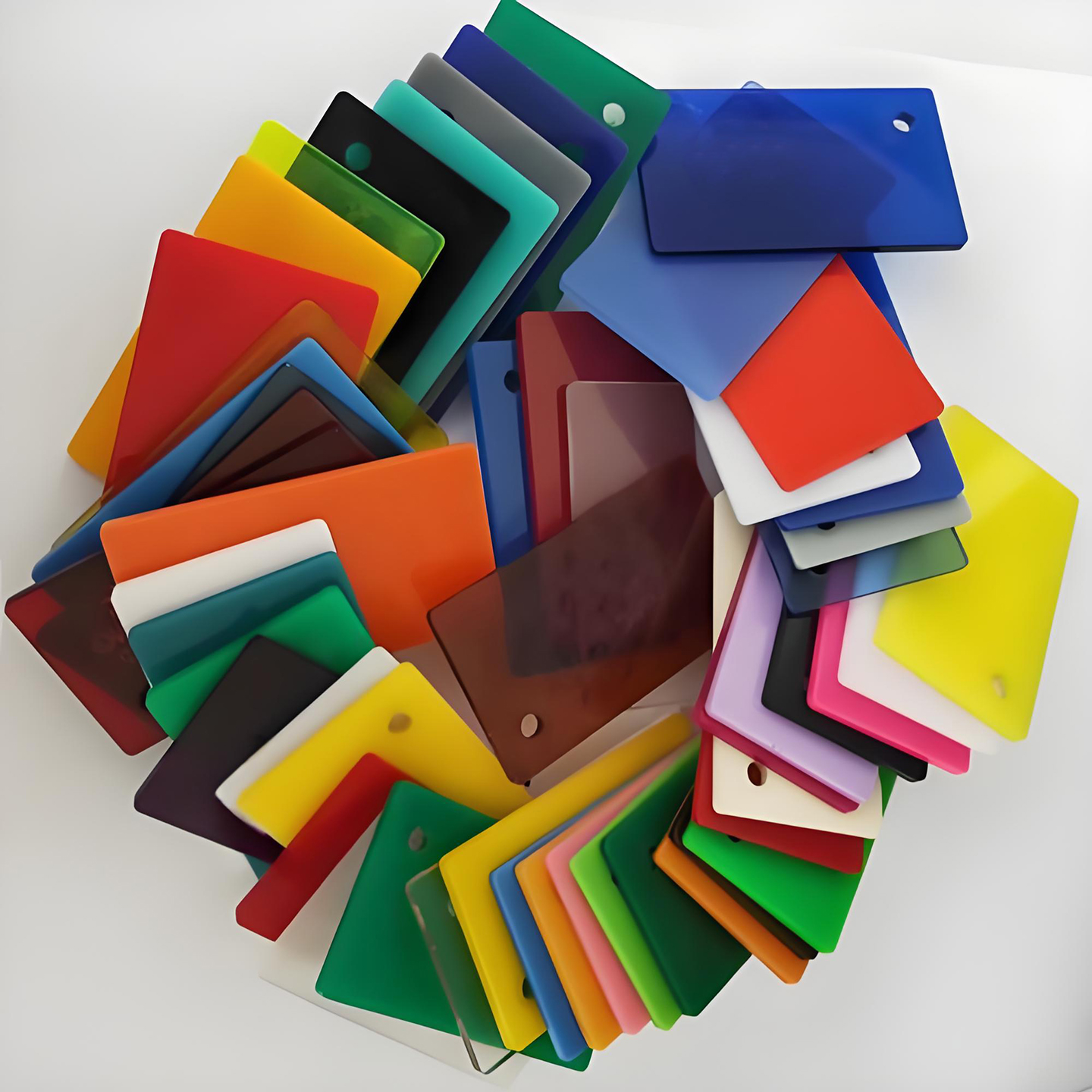
II. Usage and processing technology
liquid phase method
1. Mix methyl methacrylate monomer, plasticizer, Tissot PMMA color paste, initiator (e.g., benzoyl peroxide for polymerization initiation), and other raw materials according to the formula to prepare the prepolymer slurry. Pour the prepared slurry into the mold cavity through the reserved opening, then seal it to proceed with subsequent processing steps.
solid phase method
2. Granular extrusion method
Use PMMA solid particles for injection molding, extrusion
The accurately measured PMMA particles and the Tissot PMMA color paste are put directly into the mixer.
Medium and low speed stirring is used to ensure that the color paste can be evenly wrapped on the surface of PMMA particles. The mixing time is usually 5-15 minutes, and no obvious color paste droplet aggregation is observed visually.
III. Conventional recommended dosage
The amount of Tissot PMMA acrylic color paste added depends on three factors: the depth of the target color, the coloring power of the pigment itself, and the transparency requirements of the PMMA substrate.
General recommendation range: 0.5% ~ 4.0% (weight ratio)
Specific recommendations:
Off-white/high transparency effect: 0.2% -1.0%
Standard color/medium shade: 1.0% -2.5%
Dark/High Coverage: 2.5% -4.0% (or higher, but performance effects need to be carefully evaluated)
Important note: Higher addition amounts are not always better. When exceeding a certain proportion (typically>8%), they may negatively affect the mechanical properties of PMMA (particularly impact strength and toughness) and increase migration risks. It is strongly recommended to determine the optimal process formula through pilot testing (testing).
IV. Notes
1. Compatibility testing is the first step:
Migration test: the colored template and pure white PMMA template are tightly attached to each other under certain temperature and pressure for 24 hours, and observe whether the white template is stained with color.
Stress crack test: The colored sample is soaked in a specific solvent (e.g., acetone, ethyl acetate) for a short time and observed whether it is more prone to silver streaks or cracks than the pure material. This can be used to evaluate the compatibility of the carrier resin with PMMA.
2. Thermal history control:
Organic pigments may undergo thermal degradation under repeated processing or excessive residence time of the barrel. It is necessary to control the melting temperature and cycle time, and clean the barrel in time to avoid residual old material.
5. Performance verification:
The colored material must undergo key mechanical properties tests (e.g., impact strength, tensile strength) and weather resistance tests (e.g., UV aging) to ensure that the product specifications are met.
Carrier compatibility: Be sure to confirm that the carrier used in the color paste (such as PMMA, ABS or specific plasticizer) is compatible with your PMMA raw material to avoid migration, exudation (flowering) or stress cracking.
Tissot's premium PMMA color paste series delivers stunning and lasting color effects for PMMA products when properly selected and applied. Through systematic engineering methods, the entire production process is precisely controlled. It's recommended that no material in the chemical formula can guarantee 100% compliance with all requirements before mass production. Complete testing should be conducted before production to ensure suitability.

Mr. Jia: 159-1691-0100 13360650502 Mr. Jiang:13924940045
Email:denson168@163.com
Address: Room 101, No. 1, Lane 11, Changsheng Street, Dalian Tang, Wanjiang Street, Dongguan City, Guangdong Province

备案号:粤ICP备19036602号 粤公网安备 44190002005999号 Copyright Dongguan DENSON New Materials Co., Ltd
